
Plumbing and appliance leaks
Slow leaks under sinks, behind dishwashers, and around washing machines often soak cabinets and drywall before they are noticed.
Serving Seattle, Washington & surrounding areas
Mon–Fri 8am–6pm · Sat 9am–2pm
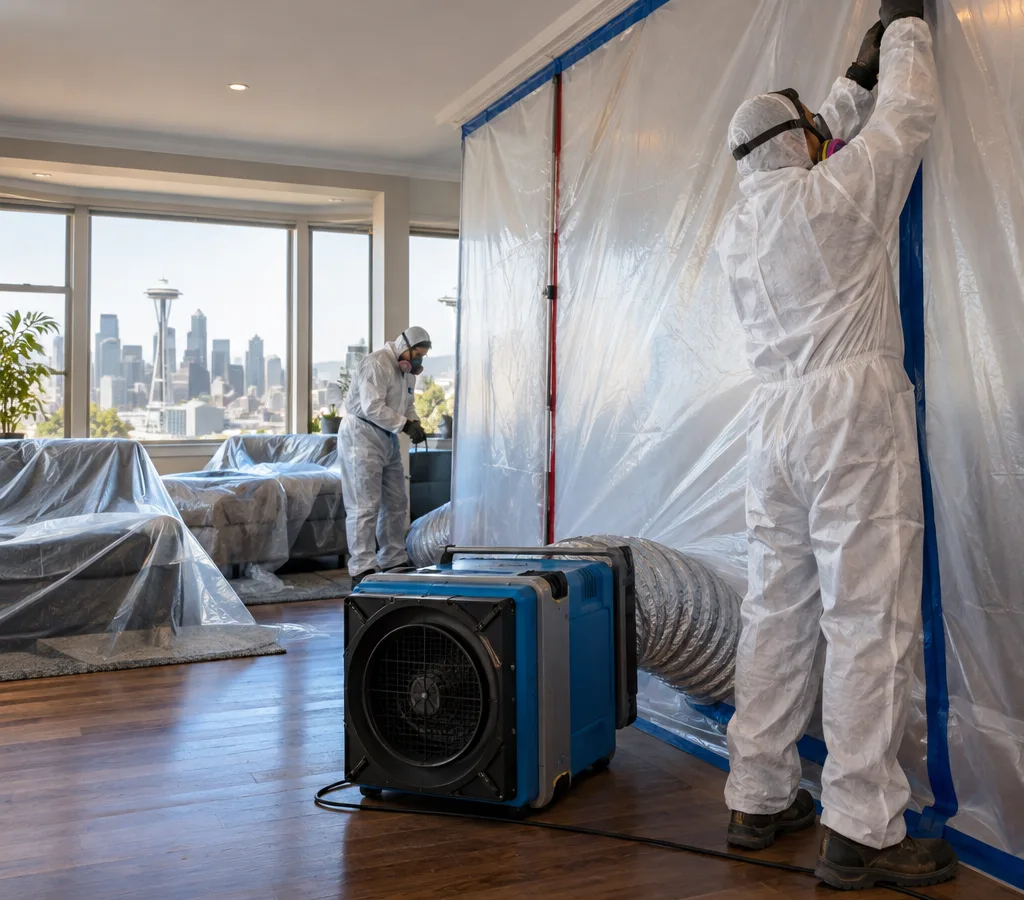
Mold remediation in Seattle, Washington
If you have visible growth or a persistent musty smell, we respond quickly, contain the affected area, remove contaminated materials, and document the work so you know what was done and what comes next.
Seattle mold remediation should never start with tearing things out. It starts with understanding where moisture is coming from, what materials are affected, and how to stop cross-contamination while the work is happening. Mold Abatement Seattle handles residential and commercial remediation with a clear scope of work, controlled containment, and practical next steps for getting the space back to normal.
Moisture conditions around Puget Sound can keep indoor materials damp longer than people expect, especially in basements, crawl spaces, older plaster walls, and areas with limited ventilation. We see a lot of issues after plumbing leaks, appliance overflows, window and flashing failures, and slow seepage around exterior walls.
In many Seattle neighborhoods, the building types change how we approach a job. In Capitol Hill and Queen Anne, older homes often have mixed materials and many layers of past repairs that need careful opening and re-sealing. In Ballard and Fremont, finished basements and ground-level rooms can hide dampness behind drywall. In West Seattle, wind-driven rain can find its way into wall cavities if siding and penetrations are tired.
Our goal is to restore a clean, safe space and leave you with a plan that makes sense. As Seattle's trusted mold abatement team, we focus on straightforward communication: what we found, what must be removed, what can be cleaned, and what conditions need to be corrected so the issue does not return.
Every building is different, but professional mold remediation in Seattle usually follows the same fundamentals. The specifics depend on where growth is present, whether materials are porous, and how air moves through the space.
We start by identifying the affected areas and outlining what will be cleaned, removed, and rebuilt by others if needed. You get clear notes on what we are doing and why.
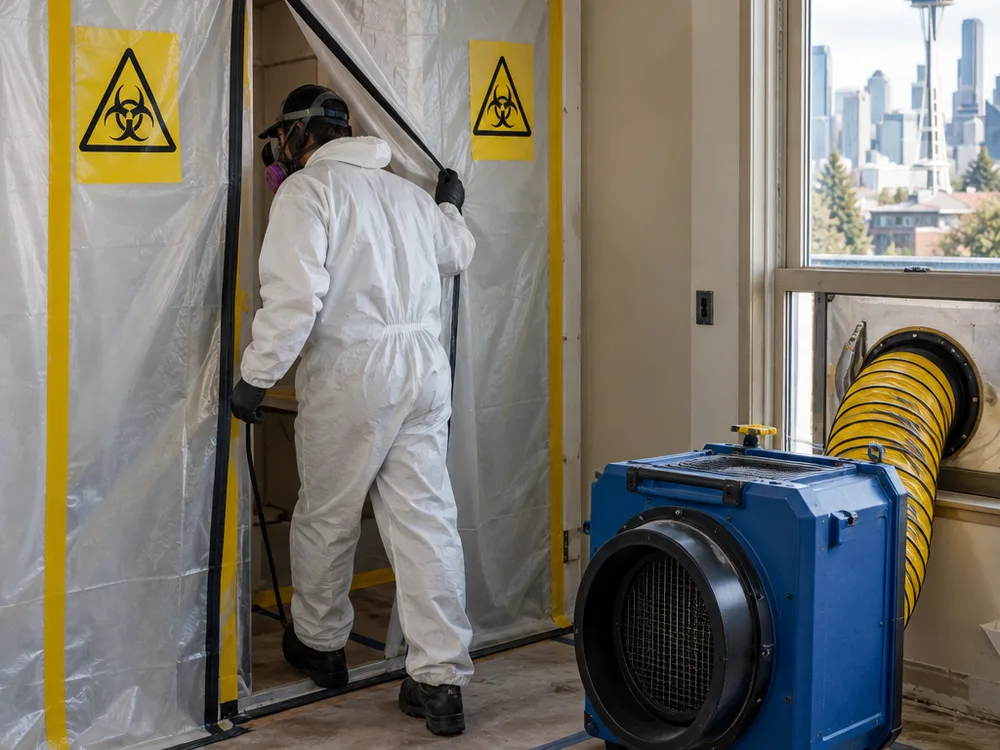
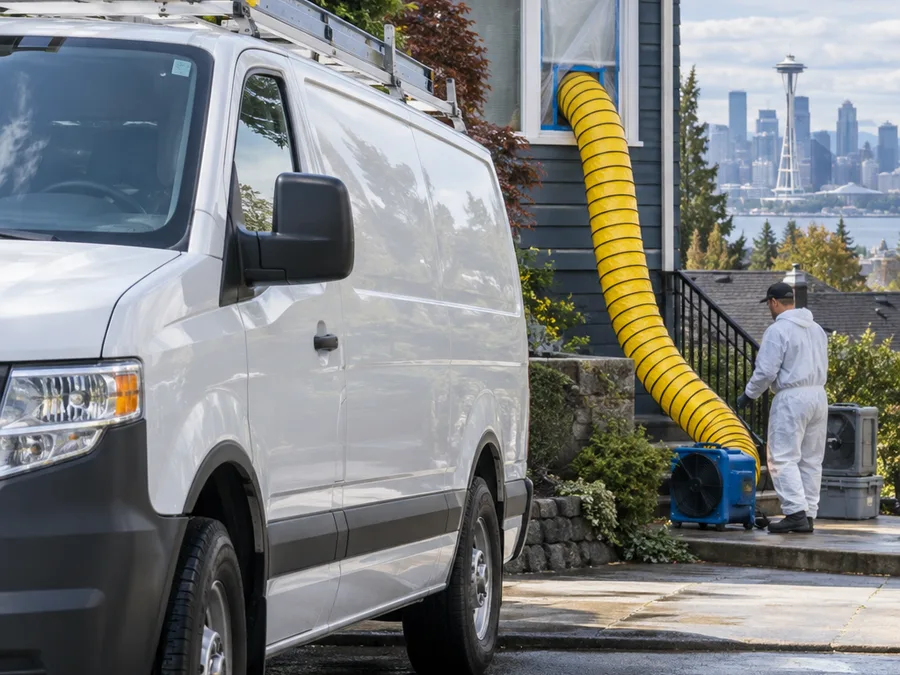
We isolate the work area with plastic sheeting and maintain negative air pressure with HEPA-filtered air scrubbers. This helps keep spores and dust from spreading to occupied parts of the home or business.
Drywall, insulation, carpet pad, ceiling tiles, and some wood products often need removal if mold has penetrated. Salvage decisions are made based on material type and condition, not guesswork.
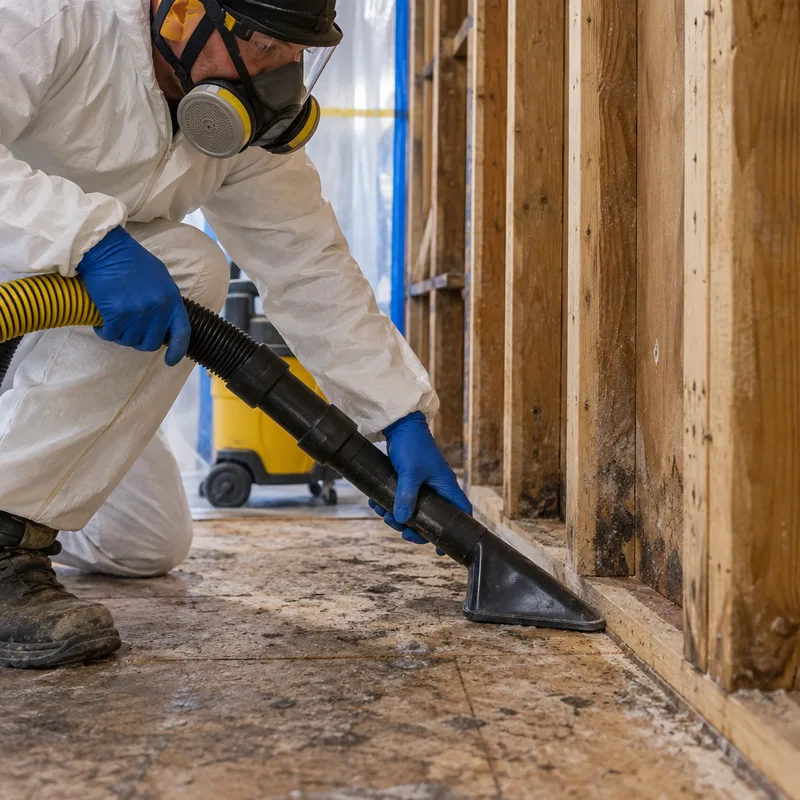
We HEPA vacuum surfaces and perform careful cleaning of framing, subfloors, and non-porous components that can be remediated.
Remediation is not complete if materials stay wet. We coordinate drying steps and advise on ventilation or dehumidification needs so the space reaches a stable condition.
We leave the area broom-clean and ready for repairs, with containment removed only after the work area is clean and controlled.
Slow leaks under sinks, behind dishwashers, and around washing machines often soak cabinets and drywall before they are noticed.
Finished basements can trap moisture behind wall coverings. We set containment to protect the rest of the home while we open and remediate affected areas.
Crawl spaces can support mold growth when ventilation is poor or ground moisture is unmanaged. Access and safe work practices are a big part of the plan.
Bathroom fans venting into attics and roof leaks can cause staining and growth on sheathing. We focus on cleaning or removal paired with the moisture correction.
Storage rooms, break areas, and utility spaces can develop problems that spread odors into customer areas. Containment keeps operations cleaner during work.
We review the concern, check likely moisture sources, and define the affected footprint so you can make decisions with real information.
You get a written scope and expectations for access, occupant safety, and how we will protect unaffected rooms.
We install barriers, create a controlled entry, and run HEPA-filtered negative air where appropriate to manage dust and airborne particles.
We remove contaminated porous materials as needed, HEPA vacuum, and clean remaining structural components that can be remediated.
We help confirm the space is dry enough for repairs and provide documentation of what was done, so your rebuild can move forward.
Pricing follows the actual scope
Seattle mold remediation typically ranges from about $1,500 to $6,500 for many residential projects, with small, contained areas sometimes closer to $800 to $1,500 and larger multi-room or crawl space work often $7,500 to $15,000+. Your price depends on the size of the affected area, how much drywall or insulation must be removed, access—tight crawl spaces add labor—the level of containment needed, and how much drying equipment is required. Exact costs are confirmed after an on-site assessment and written scope.
Book Your Free Inspection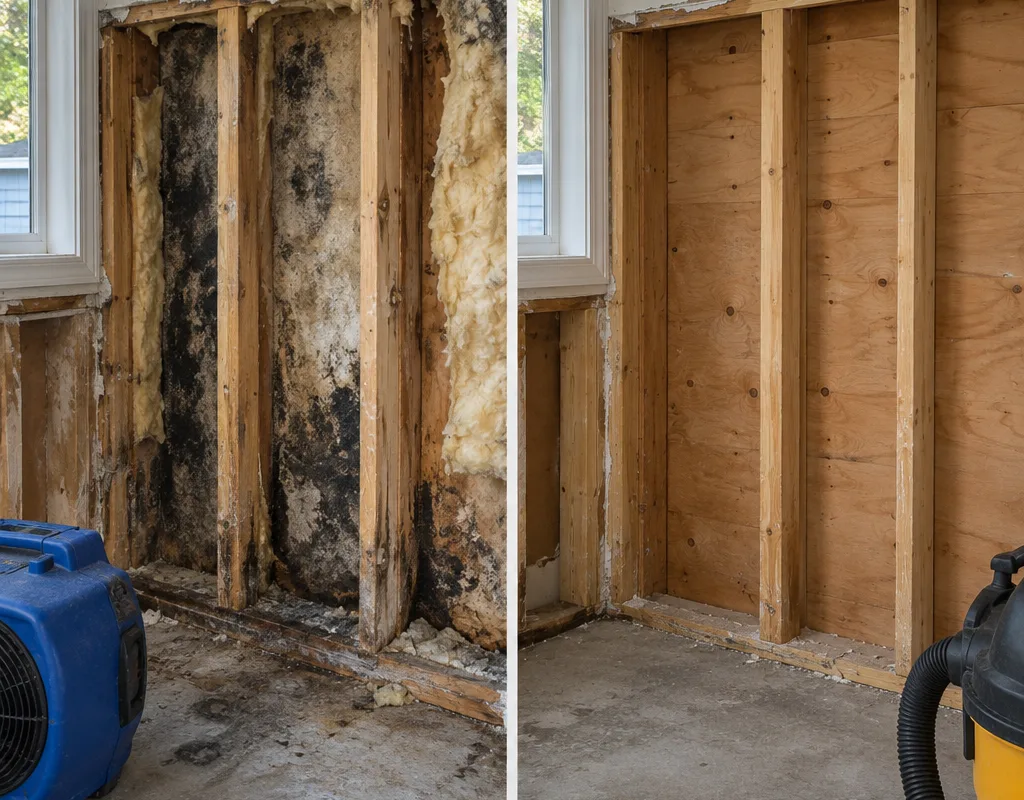
Start times depend on current schedule and the size of the affected area, but we prioritize active leaks, strong odors affecting living spaces, and situations where occupants need a clear safety plan right away. If moisture is still present, the first step is often coordinating drying and containment so conditions stop getting worse while the remediation plan is finalized.
Not always. Many Seattle mold remediation jobs can be scoped based on visible growth, moisture history, and the materials involved, especially when the affected area is clearly defined. Testing can be useful when the source is unclear, symptoms persist without visible growth, or you need third-party documentation, but remediation still requires fixing the moisture problem and addressing contaminated materials.
Sometimes, but only when the affected material can be cleaned and dried thoroughly. Non-porous surfaces can often be cleaned, while porous materials like drywall and insulation frequently need removal once they are contaminated. We make that call based on what the material is, how long it has been wet, and whether growth is on the surface or has penetrated into the material.
Many projects take 1 to 3 days of active remediation work once containment is set, but drying time and rebuild time can extend the overall timeline. A small, contained area may be completed in a day, while crawl spaces, multi-room jobs, or projects requiring significant drying typically take longer.
It depends on where the work is and how the home is laid out. With proper containment and negative air, many occupants can remain in unaffected parts of the home, but some situations call for temporary relocation, especially if the work area includes a main hallway, a frequently used bathroom, or HVAC pathways that could distribute dust. We will outline practical do's and don'ts for occupants before work begins.
Stop the moisture source if it is safe, avoid disturbing the area—scrubbing can spread particles—and limit airflow from the affected room into the rest of the space by keeping doors closed. If the issue is tied to a recent leak or overflow, quick drying and early containment often reduce how much material ultimately needs removal.
Start with an on-property inspection
Tell us what you are seeing and where it is happening. We will review the likely moisture source, explain containment and removal options, and provide straightforward next steps for your Seattle property.