Mold Remediation
A full remediation approach that pairs removal and cleaning with moisture-source correction planning, so the building can return to normal use with a documented scope.
Serving Seattle, Washington & surrounding areas
Mon–Fri 8am–6pm · Sat 9am–2pm
Mold abatement in Seattle, Washington
Safe, thorough abatement for homes and commercial spaces. Get a clear plan to remove contaminated materials, clean affected areas, and reduce the chance of mold returning.
If you are searching for mold abatement Seattle, you likely need more than surface cleaning. Abatement is about controlling exposure, removing affected materials where needed, and cleaning the space so it can be safely used again.
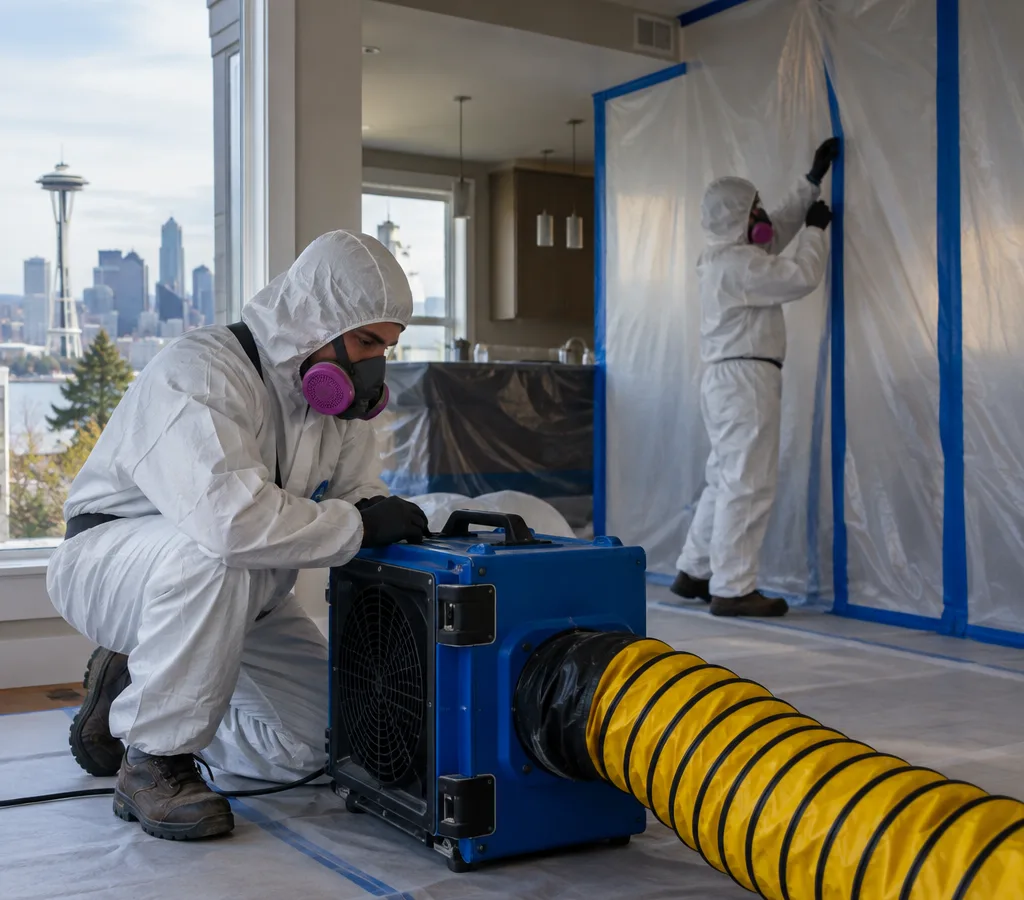
Mold Abatement Seattle focuses on practical, jobsite-safe work: setting containment to keep spores from spreading, using negative air where appropriate, removing damaged drywall or insulation, HEPA vacuuming and detailed wiping, and addressing the moisture conditions that let mold grow in the first place.
You will get a written scope that explains what areas are affected, what gets removed versus cleaned, what needs to be dried, and what you can expect for access and timing. Whether the issue is in a bathroom, basement, crawl space, attic, or around windows, the goal is the same: a clean, controlled abatement that protects the rest of the building.
Related mold services
A full remediation approach that pairs removal and cleaning with moisture-source correction planning, so the building can return to normal use with a documented scope.
Targeted removal of mold-affected building materials and residue, with containment and HEPA cleanup to limit spread to clean areas.
On-site assessment to identify likely moisture sources, affected materials, and the best next steps before any demolition or cleanup begins.
Sampling and testing options to help confirm conditions, compare indoor and outdoor air, and support real estate, tenant, or post-work documentation needs.
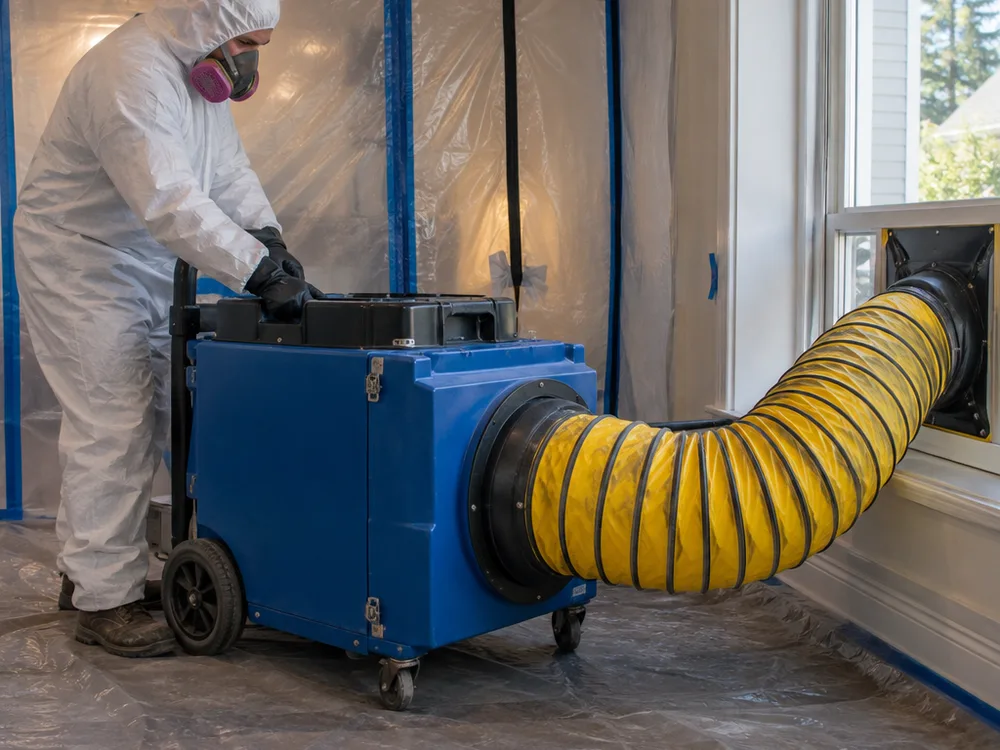
We isolate the work area with plastic barriers and controlled entry, then use HEPA filtration where needed. That keeps dust and spores from migrating into hallways, HVAC returns, and adjacent rooms.
Some materials do not clean well once contaminated, like soft drywall, insulation, or swollen trim. We remove what is needed, bag debris for safer handling, and prepare surfaces for the next trade.
We use HEPA vacuuming and damp wiping to clean settled dust on framing, subfloors, and nearby ledges inside containment. The goal is a work area that is clean enough to rebuild without recontamination.
In Seattle, recurring moisture often comes from bathroom ventilation issues, window leaks, roof or flashing failures, plumbing seepage, and damp crawl spaces. We flag conditions that need repair so the fix lasts.
Before work starts, you get a plain-language scope of what rooms are involved, what access we need, and what items should be moved or protected. During the project, we keep the plan practical and predictable.
For rentals and commercial spaces, downtime matters. We plan containment and work zones to limit disruption, and we can align the abatement schedule with property management, tenants, or other on-site contractors.
Mold Abatement Seattle provides mold abatement services across Seattle, Washington.
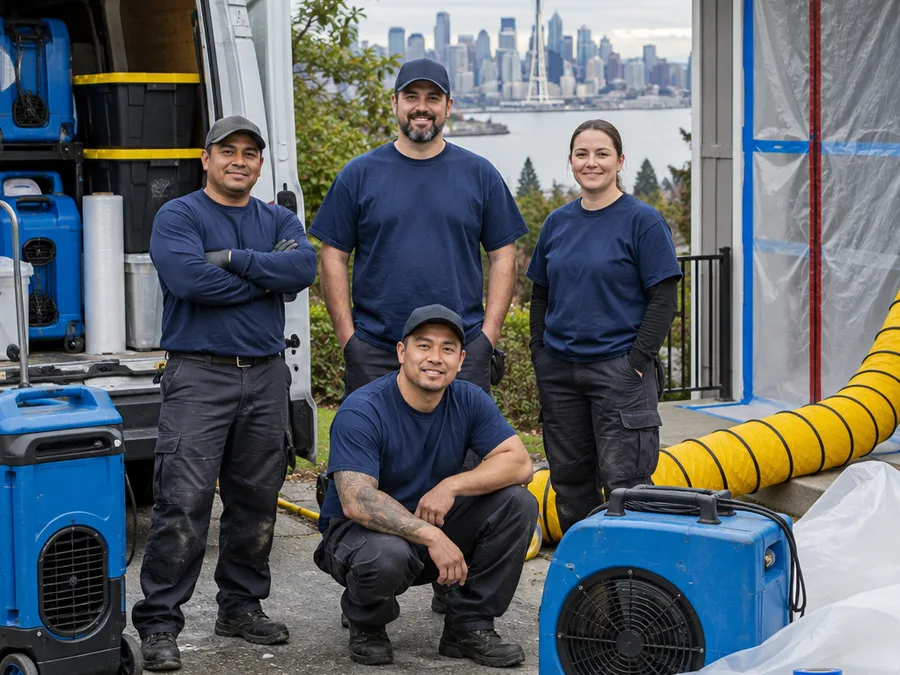
We keep the work focused on what protects people and property: controlled containment, careful removal and cleanup, and straightforward guidance on what caused the problem. If you are dealing with a musty odor, visible growth, or water damage that is not drying out, we help you move from uncertainty to a defined scope.
Our team works in occupied homes, rentals, and commercial spaces. We plan for the realities of Seattle buildings, including older plaster and lath walls, basements and crawl spaces, and tight access areas where moisture can linger. The result is an abatement approach that is safe on site and practical for the repairs that follow.
Mold abatement in Seattle typically ranges from about $1,500 to $6,000 for many residential projects. Small, localized areas (like under a sink or a small section of drywall) often fall around $800 to $2,000, while larger multi-room or crawl space work can run $6,000 to $15,000+.
Final pricing depends on how far contamination extends, what materials must be removed, access (attic, crawl space, tight framing), how much containment and filtration is needed, and drying requirements after a leak. The exact cost is confirmed after an on-site inspection and written scope.
We review visible conditions, moisture indicators, and building details to outline where abatement is needed and what materials are likely impacted.
We isolate the work zone, protect adjacent finishes, and set HEPA filtration or negative air when appropriate for the size and location of the project.
We remove unsalvageable porous materials, then HEPA vacuum and wipe remaining structural surfaces within containment for a thorough cleanup.
If moisture is present, we outline drying needs and what repairs should address the source. You get clear next steps so rebuilding does not recreate the same conditions.
If you suspect mold, the fastest way to reduce risk is to get the area assessed and contained before you start pulling materials or running fans through the whole house.
Book Your Free InspectionWe provide mold abatement throughout Seattle, with work plans that reflect the building types and moisture patterns seen in each area.
Many homes here include older basements and frequent exterior moisture exposure. We often see issues tied to window leaks, damp foundation walls, and under-ventilated laundry or utility areas.
Dense housing and multi-unit buildings can hide leaks between floors and around bathrooms. Careful containment matters to protect shared hallways, neighbors, and connected wall cavities.
Weather exposure and older roof and window details can lead to slow, unnoticed water intrusion. Abatement plans often need tight access solutions for attics, knee walls, and interior corners.
A mix of mid-century and older homes means varying insulation and ventilation setups. Crawl spaces and perimeter drainage conditions can contribute to recurring musty odors and seasonal dampness.
Older housing stock and remodel layers can conceal past leaks behind finishes. We focus on controlled demolition and careful cleanup so repairs can move forward without spreading contamination.
Many properties have basements and additions with different construction eras. We look closely at transitions near windows, bathrooms, and exterior walls where condensation and seepage can build up.
“They explained what needed to be removed versus what could be cleaned, then kept the work area fully contained. The house never smelled worse during the project, and the scope matched what they did.”
“We had mold in a basement corner after a slow leak. The team was methodical about cleanup and gave us clear guidance on what repair had to happen so it would not come back.”
“As a property manager, I needed straight answers and minimal disruption. The plan for access and containment was realistic, and the unit was ready for the next steps without delays.”
Mold abatement typically includes containment, air control as needed, removal of unsalvageable materials, HEPA vacuuming and detailed wiping, and a written scope that outlines next steps for drying and repairs.
Yes, many projects are completed in occupied homes. We isolate the work zone, protect adjacent areas, and coordinate access so you can avoid the contained space while work is in progress.
Yes, crawl spaces and attics are common problem areas in Seattle because moisture can linger and ventilation can be limited. We plan for safe access, containment at the entry point, and proper debris handling.
Scheduling depends on current workload and the urgency of the situation, but we prioritize active leaks, recent water damage, and projects where occupants have exposure concerns. Share what is happening and we will recommend the next step.
Abatement removes contamination and cleans affected areas, but the underlying moisture source still needs repair. We identify likely causes such as leaks, ventilation issues, or condensation so your plumber, roofer, or contractor can correct them.
A quick description of the affected area and any known water event helps, then an on-site inspection confirms materials, access, and containment needs. After that, we can provide a clear scope before work begins.
Start with an on-property inspection
Tell us what you are seeing and where it is happening. We will review the situation, outline the safest next steps, and provide a written scope for mold abatement in Seattle.