Containment built for the job
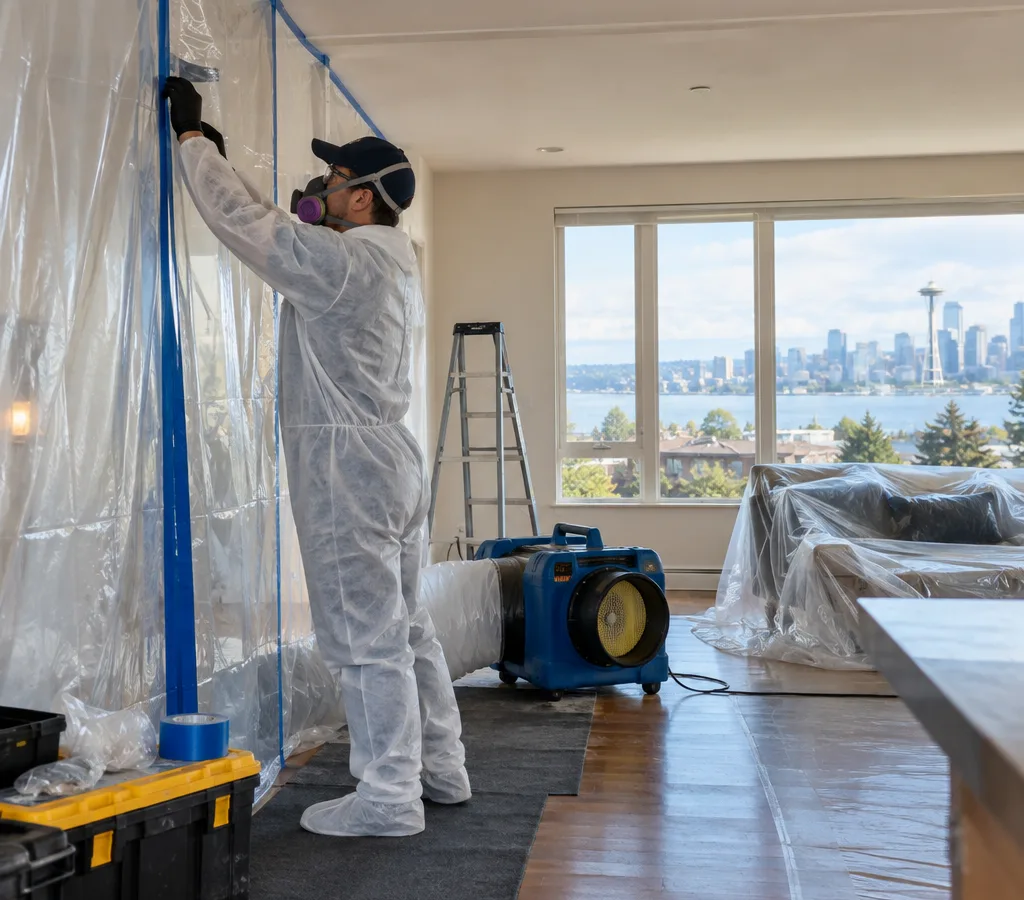
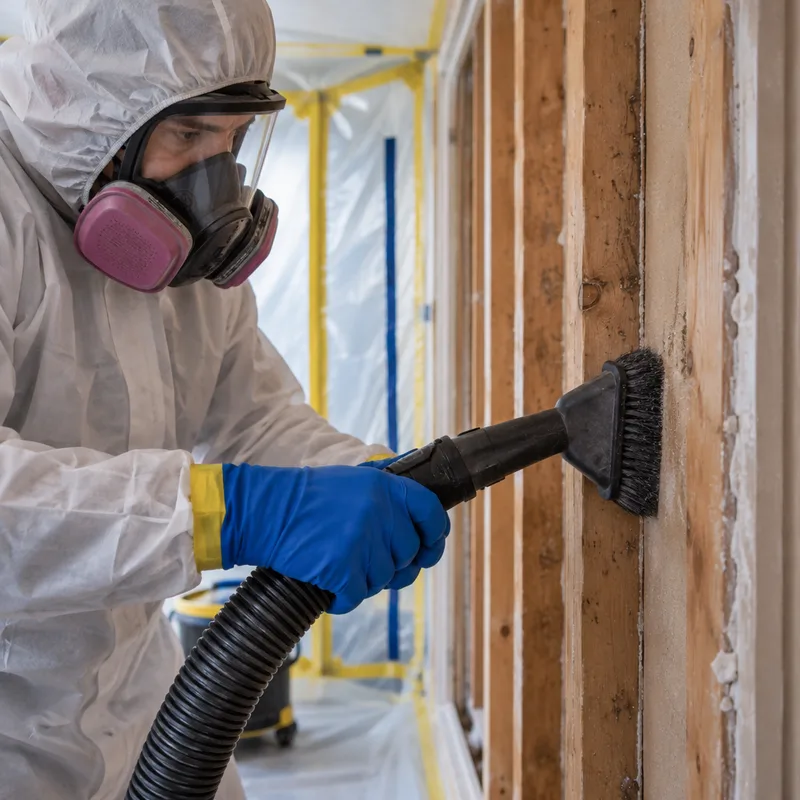
Critical barriers, sealed registers, and controlled entry keep spores from traveling to clean areas during demolition and cleaning.
Serving Seattle, Washington & surrounding areas
Mon–Fri 8am–6pm · Sat 9am–2pm
Mold removal in Seattle, Washington
Certified containment, careful removal, and post-cleanup verification so you can get back to a dry, healthy indoor space with a clear plan for preventing regrowth.
If you are searching for mold removal Seattle homeowners can rely on, start by looking for a team that treats moisture control and containment as non-negotiable. Mold is usually a symptom of water intrusion, chronic humidity, or slow leaks. Removing visible growth without controlling the underlying moisture often leads to repeat problems.
Mold Abatement Seattle approaches remediation as a controlled jobsite: isolate the affected area, protect the rest of the home, remove contaminated materials when required, clean and HEPA-filter remaining surfaces, and confirm the space is ready for rebuild or re-occupancy. With an experienced mold abatement team in Seattle handling the work, it stays organized around a written scope, clear safety practices, and documentation you can keep for your records.
Seattle homes face plenty of opportunities for moisture to build up: long wet stretches, older building assemblies that were not designed for today's indoor humidity levels, and tight crawlspaces that can trap damp air. That makes the details matter, like negative air pressure, HEPA vacuuming, and careful handling of porous materials.
Mold can grow anywhere moisture and organic material meet, but some areas create repeat callbacks if they are not handled correctly.
In Ballard and Magnolia, older homes and additions sometimes hide slow plumbing or roof leaks behind wall cavities. A good remediation plan includes targeted inspection around suspected leak paths, not just cleaning what is visible.
In Capitol Hill and Queen Anne, multifamily buildings can mean shared plumbing stacks and complex ventilation. Containment and coordination matter so adjacent units are protected and moisture sources are addressed.
In West Seattle, wind-driven rain and older windows can contribute to damp framing around openings. When trim or drywall is removed, the area should be cleaned, dried, and verified before it is closed back up.
In Rainier Valley, basements and lower levels often need extra attention to drying and airflow. Crawlspace and basement conditions can keep humidity high even after surface mold is cleaned.
If you already had a leak repaired, mold can still remain in insulation, drywall paper, or wood framing. Proper mold removal focuses on what is contaminated, what can be cleaned, what must be removed, and what needs drying time before anything is rebuilt.
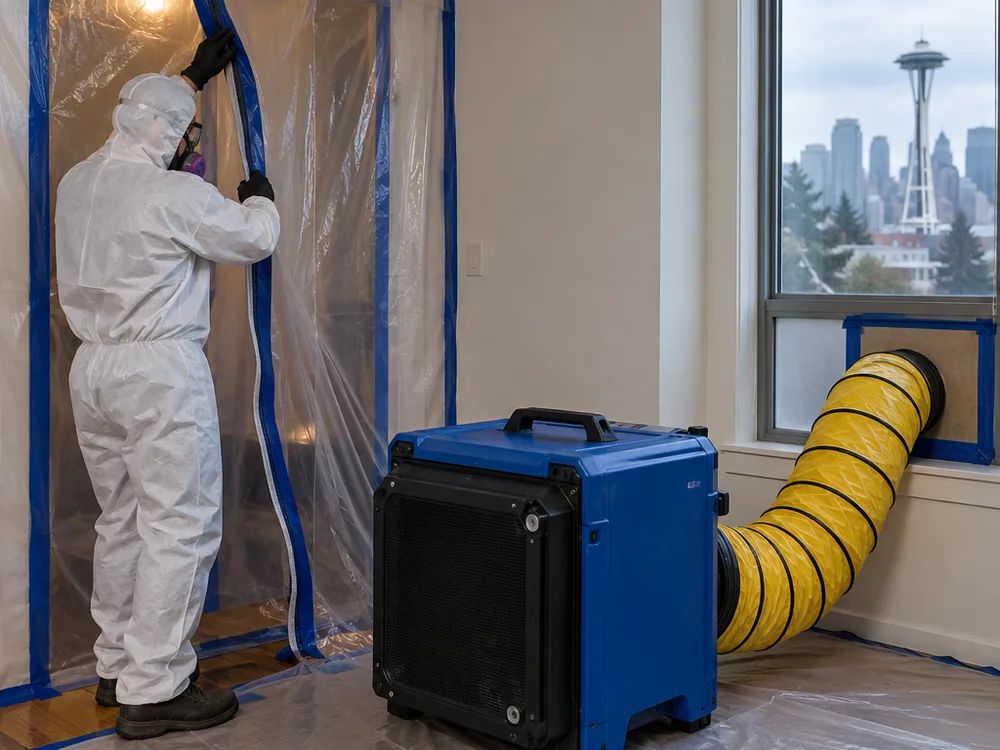
Critical barriers, sealed registers, and controlled entry keep spores from traveling to clean areas during demolition and cleaning.
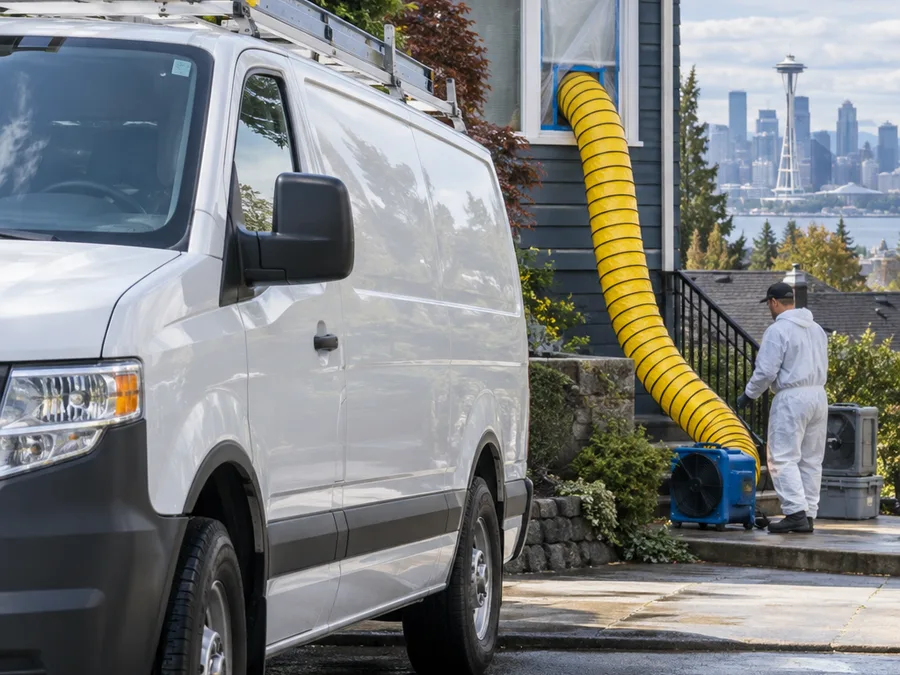
HEPA air scrubbers and negative pressure help capture airborne particulate while work is underway, especially during removal of porous materials.
Drywall, insulation, carpet pad, and other porous materials are removed when they are contaminated and cannot be reliably cleaned.
Fine particulate is captured with HEPA vacuums, then cleaned using appropriate methods for the surface type and contamination level.
Drying is part of mold control. Moisture readings and visual checks help confirm the space is ready for repairs or re-occupancy.
A written scope, photos when appropriate, and a practical prevention plan help you understand what was done and what to watch next.
We look for visible growth and moisture conditions that support it, then define the affected area and what materials are likely impacted. You get a straightforward scope so expectations are clear before work starts.
We set containment, protect floors and pathways, and establish negative air where appropriate. The goal is to keep the work controlled and prevent cross-contamination.
Contaminated porous materials are removed as needed, and remaining surfaces are cleaned using HEPA vacuuming and detailed wipe-down methods suited to the substrate.
We address drying needs and verify conditions with moisture readings where they matter. If the area cannot stay dry, we flag the underlying issue so it is corrected before close-up.
We leave the area clean, remove containment carefully, and walk you through what was done, what needs repair or rebuild, and what prevention steps fit your home.
Pricing follows the actual scope
Mold removal in Seattle typically ranges from about $800 to $6,000+, with small, localized remediation (like a limited bathroom or laundry-area issue) often landing around $800 to $2,000, and larger projects with containment and material removal commonly $2,500 to $6,000+.
Your exact price depends on the size of the affected area, what materials are involved (drywall, insulation, framing), access (attic, crawlspace), how much containment is required, and whether drying equipment is needed. Final cost is confirmed after an on-site inspection and written scope.
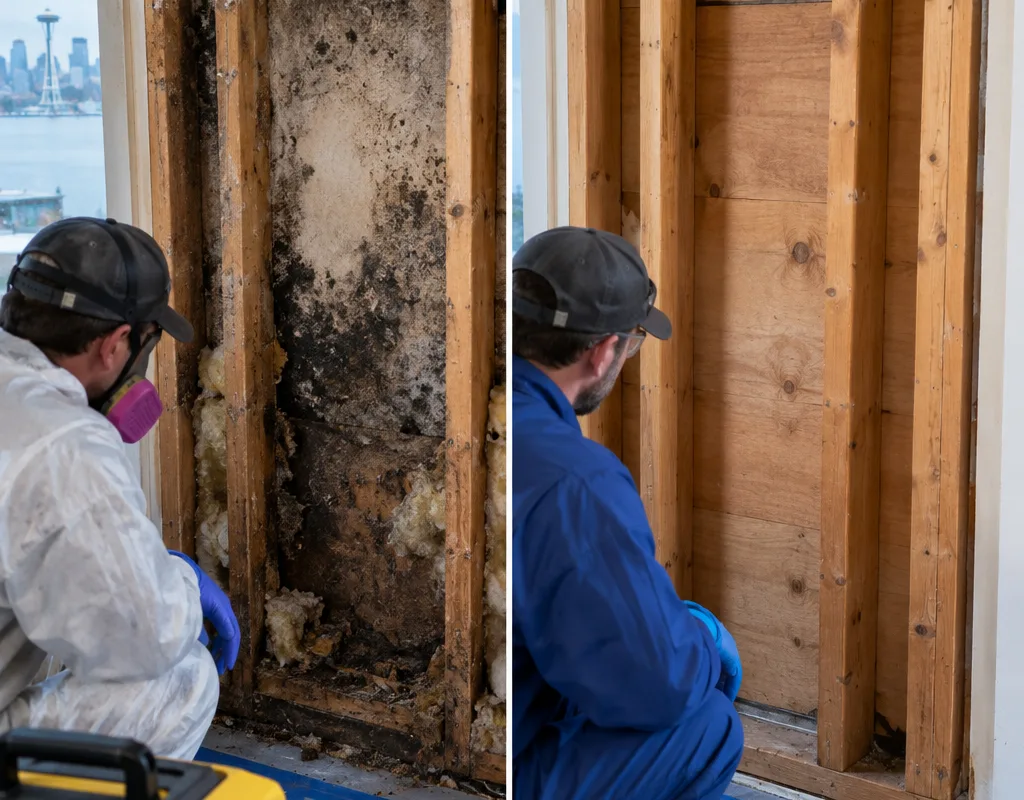
Even excellent remediation can be undermined by ongoing moisture. After mold removal, prevention is usually about keeping materials dry and improving how the building handles water and air.
Common prevention steps include correcting the leak or intrusion point, maintaining consistent bathroom and kitchen exhaust use, improving airflow in damp corners, and addressing crawlspace or basement humidity. If a roof or plumbing repair is part of resolving the root cause, it helps to schedule it promptly so materials do not stay damp.
If you are navigating a real estate timeline or preparing documentation for a landlord, property manager, or insurer, we can keep the scope and work notes organized so you have a clear record of what was found and what was remediated. For general information about how our team handles scheduling and job coordination across services, you can get a sense of our approach through Mold Abatement Seattle.
Scheduling depends on urgency and the size of the affected area, but many projects can start quickly once an inspection and scope are complete. If you have an active leak or recent water damage, priority should be stopping the water source and setting drying quickly so mold does not spread while you wait.
Not always, but it depends on where the work is and how much containment is required. For a small, well-contained area, occupants can often remain elsewhere in the home, while larger demolition or projects near main living areas may be more comfortable with temporary relocation, especially for sensitive individuals.
Bleach is not a reliable whole-solution for mold because it does not always penetrate porous materials and it does not fix the moisture source. Professional remediation focuses on containment, removal of contaminated porous materials when needed, HEPA filtration, and cleaning methods matched to the surface.
Porous materials that are contaminated often need removal, such as drywall, insulation, carpet pad, and sometimes baseboards or cabinetry components depending on exposure. Non-porous and semi-porous surfaces may be cleaned and HEPA-vacuumed if they are structurally sound and accessible.
Yes, and access and containment planning are especially important in those spaces. Seattle homes with tight crawlspaces or low-slope attics often require careful staging, protective barriers, and a drying plan so the area stays dry after remediation.
Mold can return if moisture conditions return, so long-term success depends on correcting leaks, ventilation issues, or humidity problems. A proper scope includes prevention guidance so you know what changes keep the area dry after the cleanup is complete.
Start with an on-property inspection
Tell us what you are seeing and where it is showing up. We will schedule an inspection, explain what should be removed versus cleaned, and outline the steps that help prevent the problem from returning.