
Chronic condensation
Cold glass and exterior wall surfaces can collect moisture for months at a time. We check for ventilation and humidity conditions that keep surfaces damp.
Serving Seattle, Washington & surrounding areas
Mon–Fri 8am–6pm · Sat 9am–2pm
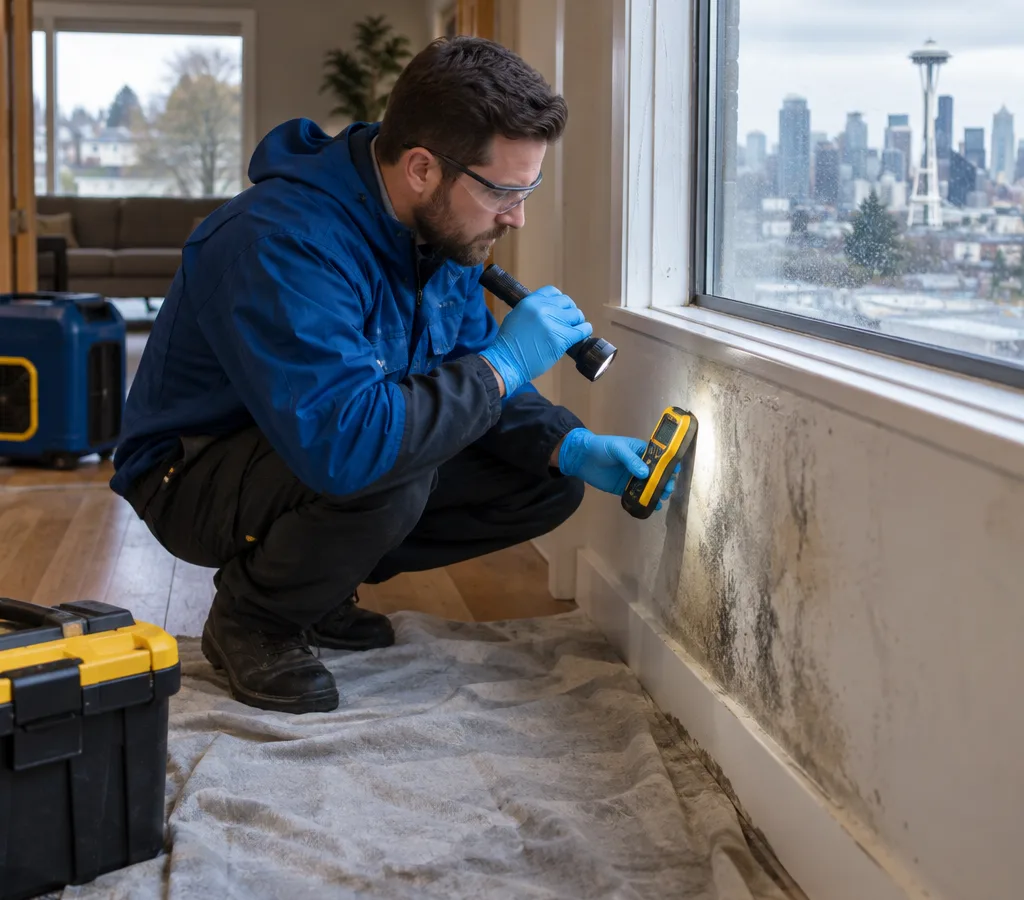
Mold inspection in Seattle, Washington
Get a clear, documented assessment of visible and hidden mold, the moisture conditions driving it, and practical next steps you can act on.
When you book a mold inspection in Seattle, you are usually trying to answer a few urgent questions: Is this actually mold, how far has it spread, what is feeding it, and what needs to happen next? Our inspections focus on evidence, not assumptions. We look for growth, moisture intrusion, and building conditions that make mold return, then document what we find so you can make informed decisions.
Seattle's long wet season and cool indoor surfaces can create the kind of persistent dampness that keeps mold active, especially around windows, exterior walls, and basements. We see similar patterns in older housing stock and in homes with tight building envelopes where ventilation is limited.
Mold Abatement Seattle provides mold inspection Seattle property owners can rely on when they need a straightforward plan: what areas are affected, what likely caused it, and what to prioritize first so the problem does not repeat.
A proper inspection starts with the building, not the stain. We combine visual assessment with moisture diagnostics to determine whether conditions are present for active growth and where that moisture is coming from.
During your visit, we typically:
If sampling is appropriate, we will explain why and what it can and cannot tell you. Sampling can help confirm the type of mold or support a scope decision, but moisture source identification is what prevents repeat growth.
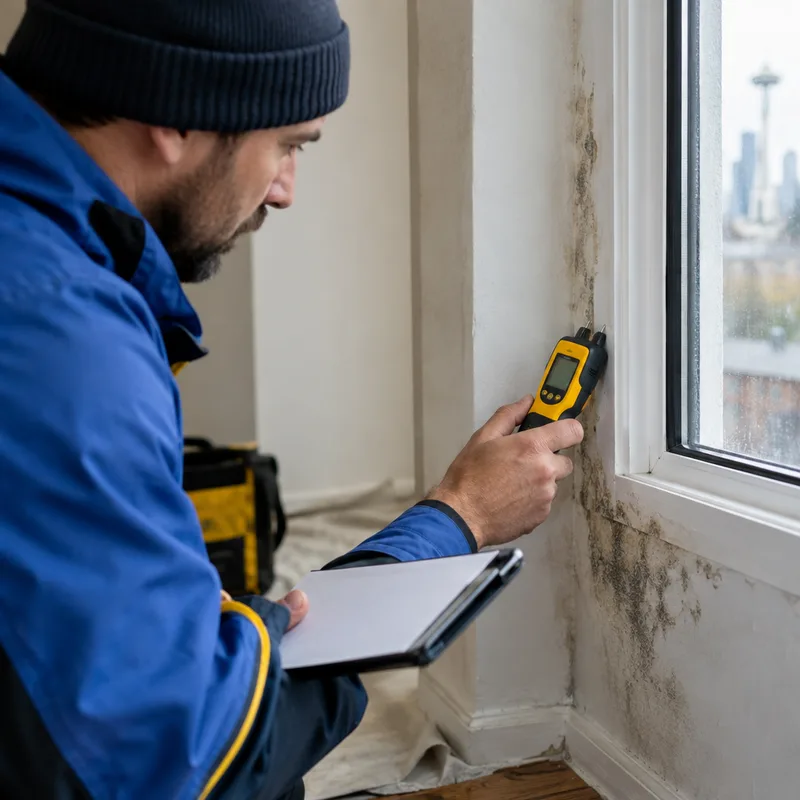
Cold glass and exterior wall surfaces can collect moisture for months at a time. We check for ventilation and humidity conditions that keep surfaces damp.
Slow leaks under sinks, behind toilets, and at washing machines often show up as hidden wetness in cabinets, flooring, or wall cavities.
Small failures at flashing, skylights, or window seals can wet framing and insulation without obvious dripping. We look for patterns that track water entry.
Ground moisture and limited airflow can keep wood and insulation damp. We inspect for standing water, wet soil, and moisture migration into the home.
After a leak or flood, materials that were covered back up before drying can become a mold reservoir. We check the areas people often patch and paint.
Bathroom fans, dryers, and HVAC can move moisture and spores through the home. We consider airflow pathways, not just the visible spot.
Local building context matters
Different parts of Seattle tend to present different inspection patterns, and the building context matters when you are trying to pinpoint moisture.
In Ballard and Fremont, we often see older homes with multiple remodel phases. That can mean mixed materials behind finished surfaces, so moisture mapping and careful visual tracing matter.
In Capitol Hill, dense housing and shared walls can make it harder to tell whether moisture is originating inside the unit or migrating from an adjacent area. We document conditions and advise on what to coordinate with building management.
In West Seattle, wind-driven rain exposure and complex rooflines can contribute to intermittent wetting that does not show up every day. We pay attention to staining patterns and the history of when symptoms appear.
In Rainier Valley, a range of construction types means we adjust our approach based on what we find on site, from older plaster walls to newer assemblies where condensation can hide behind finishes.
If you are trying to decide whether to schedule an inspection or move straight to corrective work, start with the assessment. We, a professional mold abatement company in Seattle, WA, aim to give you a defensible picture of what is happening so the next step is targeted.
We collect basic details about the property type, where you are seeing symptoms, and any known leak or humidity history so we arrive ready to focus on the right areas.
We inspect the reported area first, then expand to adjacent and upstream locations where moisture typically originates. Moisture readings help distinguish active wetness from old staining.
If sampling will change the decision you need to make, we explain the options and take samples carefully to avoid cross-contamination. If it will not change the plan, we will tell you that too.
You get a clear summary of what we observed, where moisture is present, and what conditions are likely supporting growth. Photos and notes are included so you can reference them later.
We outline practical next steps, including what should be corrected first—like a leak or ventilation issue—and what areas may need containment, cleaning, or removal based on what we found.
Pricing follows the inspection scope
Mold inspection in Seattle typically ranges from about $300 to $800, depending on property size, how many areas need evaluation, and whether sampling is needed. A straightforward, single-area inspection is often at the lower end, while larger homes or multi-area investigations trend higher.
Final pricing varies based on access—attic, crawlspace, or tight mechanical rooms—the amount of moisture mapping required, and the number and type of samples. Exact cost is confirmed once we understand the site conditions and your goals for the inspection.
Clear findings homeowners can use
“We had a musty smell that came and went. The inspector traced it to moisture around a window wall and showed us readings that made it obvious what was happening. The write-up was clear enough for our contractor to act on.”
“I appreciated that they did not jump straight to the scariest outcome. They explained what was likely old staining versus active moisture, and what we needed to fix first so it would not return.”
Scheduling depends on current demand, but we prioritize time-sensitive situations like active leaks, recent water intrusion, or visible growth spreading. Share what you are seeing and where, and we will recommend the right urgency and what to do in the meantime to avoid disturbing suspected growth.
You can often make a practical plan from visual findings and moisture measurements alone, especially when growth is visible and the moisture source is clear. Lab testing is most useful when results will change a decision, such as confirming whether a suspicious material is mold, documenting a baseline, or supporting a scope on a complex property.
Leave the area as-is and avoid scrubbing, sanding, or spraying bleach on suspected mold, since that can remove evidence and spread particles. If possible, provide access to under-sink cabinets, the water heater area, and any crawlspace or attic entry so we can trace moisture pathways efficiently.
Yes, if there is safe access. In Seattle homes, crawlspaces and attics are common places for moisture and staining to show up first, so inspecting them can help identify whether the issue is condensation, roof intrusion, or plumbing ventilation problems.
A mold inspection can usually narrow the moisture source to a likely mechanism and location, based on moisture readings, building patterns, and visual indicators. Some sources are straightforward, while intermittent intrusion may require correlating findings with weather conditions or targeted follow-up diagnostics.
Yes. For shared-wall buildings, we document conditions inside the unit and help you understand what may need coordination with building management, such as exterior envelope issues, roof drainage, or plumbing that serves multiple units.
Start with an on-property inspection
Tell us what you are seeing, where it is showing up, and whether there was a recent leak or odor change. We will guide you through what an inspection will cover and what to expect from the findings.