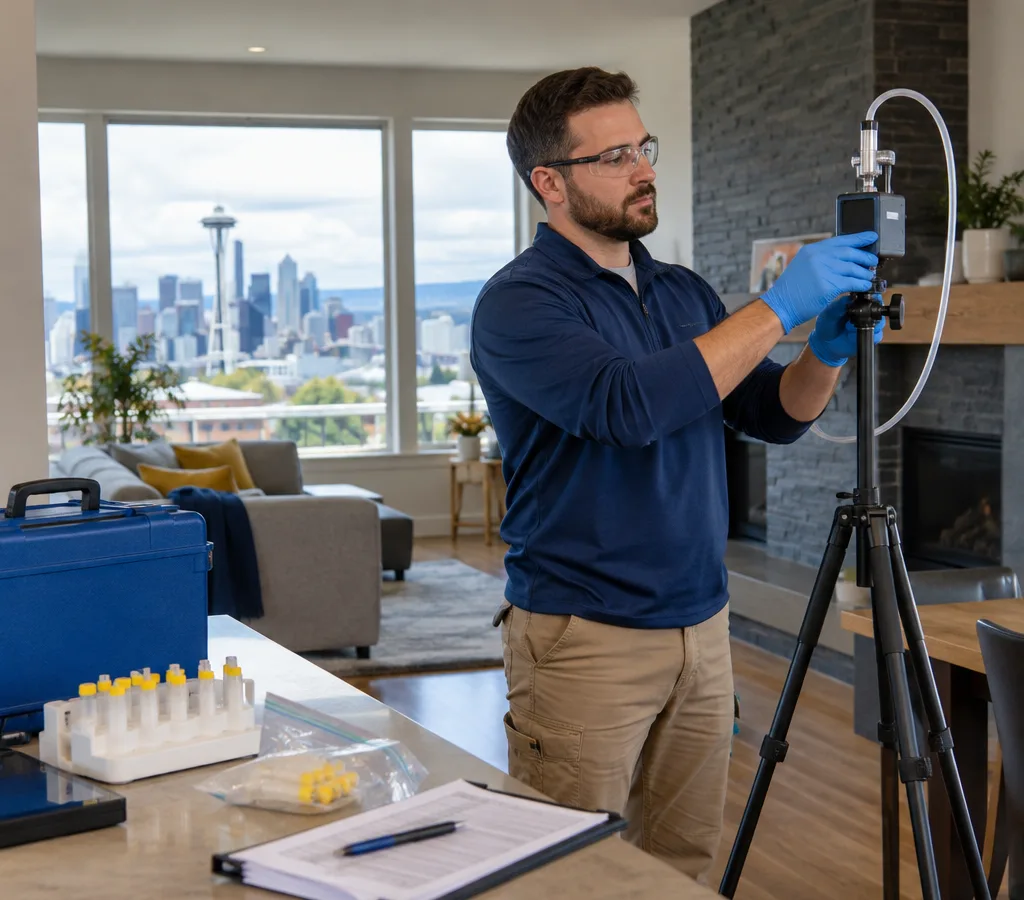
Inspector collecting an air sample with a calibrated pump and chain-of-custody paperwork in a Seattle-area home

Mold testing in Seattle, Washington

Mold Testing Seattle

Fast scheduling, careful sampling, and lab-backed results you can act on. Get clear answers about what's in the air and on surfaces before you decide on next steps.

Inspection-led sampling Independent lab analysis Chain-of-custody documentation Clear written findings

Get reliable answers from professional mold testing in Seattle

If you're searching for mold testing Seattle homeowners can trust, you're usually trying to answer one practical question: is there a mold problem that needs action, or is it something else, like dust, condensation, or an old stain? A proper test should do more than confirm what you already suspect. It should document conditions, collect defensible samples, and return results that actually help you decide what to do next.

Mold Abatement Seattle provides inspection-led testing with clear documentation, appropriate sample types, and third-party lab analysis. Working as Seattle's local mold abatement service, our team operates in the same damp, coastal climate as you do, where leaks, condensation, and slow-drying building materials can turn small moisture issues into persistent indoor air problems.

Testing is most useful when you need a neutral snapshot of what's present now: after a water event, before buying or selling, when odors persist, or when visible growth is limited but symptoms or musty smells keep showing up. We focus on getting you clear findings, not vague warnings, so you can plan the next step with confidence.

Book Your Free Inspection
Clear evidence, practical direction

What you get with our mold testing Seattle service

Inspection first, then sampling

We start by walking the space and looking for moisture pathways: roof and window leaks, plumbing penetrations, crawlspace conditions, and condensation at cold surfaces. Samples are chosen based on what we see, not a one-size kit.

The right sample type for the question

Air samples help compare indoor to outdoor conditions, surface samples help identify what a spot is, and dust or cavity samples can help in harder-to-access areas. We explain what each sample can and cannot tell you.

Lab-backed results with a clear write-up

You receive a report that ties lab findings to where samples were collected, what was observed on-site, and what conditions could be feeding growth.

Fast mold testing Seattle scheduling

When you're dealing with a recent leak or an active odor complaint, timing matters. We prioritize quick booking and prompt sample submission so you're not waiting weeks to make a decision.

Straight talk on next steps

If findings point to a moisture source, we'll tell you what to fix first. If testing suggests a limited issue, we'll explain what a targeted plan can look like.

Where mold problems show up around Seattle homes

Seattle's wetter months and long stretches of high indoor humidity make it easy for small moisture problems to linger. Testing often starts in the places that stay cool, shaded, or slow to dry.

Common inspection and sampling areas include:

  • Bathrooms and laundry areas: exhaust fans that don't move enough air, wet drywall around tubs, and damp flooring edges.
  • Basements and daylight basements: older foundations, stored belongings against exterior walls, and intermittent seepage that never fully dries.
  • Crawlspaces: standing water after storms, unsealed vents, or missing ground vapor barriers.
  • Attics: roof leaks, bathroom fan ducts that terminate improperly, or condensation on sheathing.

In neighborhoods with a lot of older housing stock like Ballard and Greenwood, we often see a mix of original assemblies and newer upgrades. That can create pockets where warm indoor air meets cold surfaces and condenses. In denser areas such as Capitol Hill and Queen Anne, shared walls and stacked units can also mean moisture from one unit affects another, so sampling locations and interpretation matter.

If you're preparing for a purchase, pairing testing with a careful visual assessment can help catch risks that don't show up in a quick walk-through. For broader due diligence beyond a single concern, some buyers coordinate mold testing with a general home inspection in Seattle so findings have context.

Book Your Free Inspection
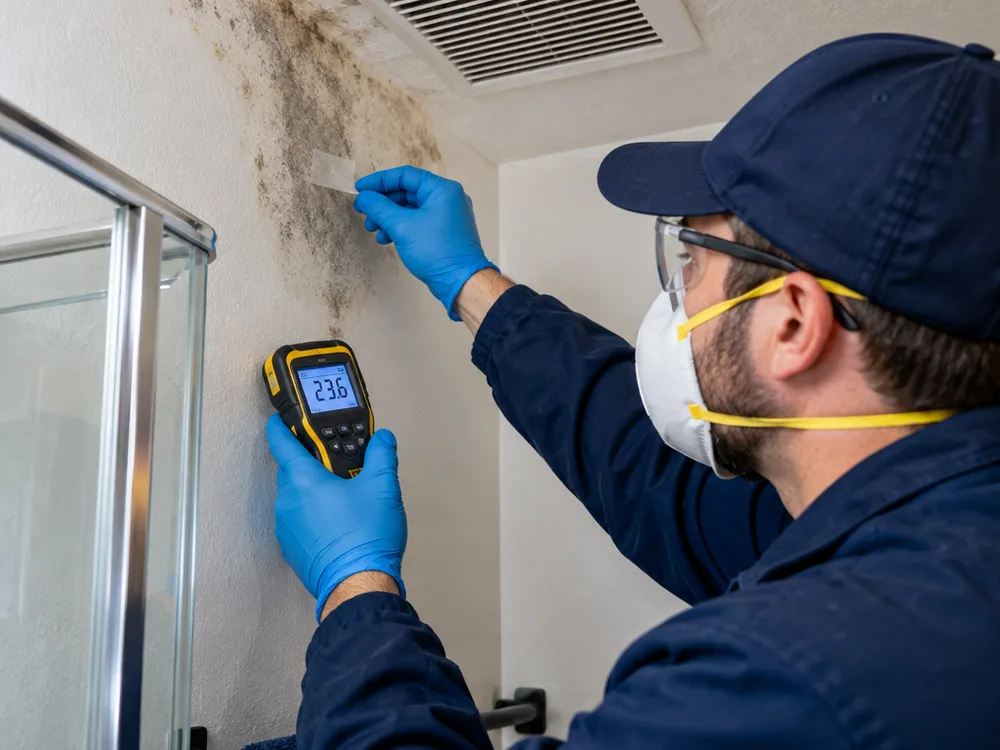
Inspector collecting a tape-lift sample near a bathroom vent while checking the wall with a moisture meter

From concern to clear findings

How our mold testing process works

Book Your Free Inspection
01

Quick intake and scheduling

We ask what you're seeing—odor, staining, a past leak, or visible growth—and where. That helps us plan the right sampling approach and keep the visit efficient.

02

On-site inspection and moisture checks

We walk the affected areas, look for likely moisture sources, and use basic field tools such as moisture meters to guide where sampling makes sense.

03

Sampling with clear labeling and documentation

Air, surface, and other samples are collected as appropriate, labeled by location, and handled with chain-of-custody documentation for the lab.

04

Lab analysis and results

Samples are submitted to an independent lab. Turnaround depends on the lab and sample type, but we prioritize fast mold testing Seattle requests when timing is tight.

05

Findings review and practical recommendations

We summarize what was observed, what the lab found, and what actions make sense next. If results don't point to mold as the driver, we tell you that too.

Pricing follows the sampling plan

How Much Does Mold Testing Cost in Seattle?

Mold testing in Seattle typically ranges from about $350 to $850, depending on the size of the home and how many samples are needed. A straightforward inspection with a small number of air or surface samples is usually at the lower end, while larger homes, multi-level condos, or situations that need multiple indoor areas compared can run higher.

Pricing changes with sample count, access to crawlspaces or attics, whether you need both indoor and outdoor baselines, and how targeted the investigation needs to be after a leak or remodeling work. Exact cost is confirmed after we understand the scope and sampling plan for your property.

Book Your Free Inspection

“We had a persistent musty smell in a basement room and didn't want guesses. The inspection was thorough, the samples were clearly documented, and the report helped us focus on a moisture source instead of tearing out finishes blindly.”

Nina P.

“Fast scheduling mattered because we were in escrow. The results came back quickly and the explanation of what the numbers meant was the most helpful part.”

Marcus L.

Mold testing questions Seattle homeowners ask

How fast can I get fast mold testing in Seattle? +

In many cases we can schedule quickly and submit samples to the lab the same day as the visit, with results depending on the lab's turnaround time. If you're dealing with a recent leak, a real estate deadline, or an active odor complaint, tell us your timeline upfront so we can plan sampling and reporting accordingly.

Do I need air testing, surface testing, or both? +

It depends on what you're trying to confirm: air testing helps evaluate what's airborne in a room, while surface testing helps identify what a visible spot is. Many Seattle jobs use a combination when there's both a suspected source area and a question about broader indoor air impact.

Should I test right after a leak or wait until things dry? +

If materials are still wet, it's often best to document conditions immediately and focus on drying and source control first, then test if concerns remain. Mold growth can start on damp building materials quickly, but the most important first step is stopping the water and drying the assembly so conditions don't keep feeding growth.

Can you test a condo or apartment unit in Seattle? +

Yes, mold testing can be done in condos and apartments, and sampling can be tailored to a single unit. In multi-unit buildings, we pay extra attention to shared-wall plumbing, exterior wall condensation, and ventilation pathways because moisture and airflow don't always respect unit boundaries.

What should I do before the appointment to avoid skewing results? +

Avoid heavy cleaning, air purifiers running at high settings, or disturbing suspected areas right before testing unless there's a safety issue. Normal living is fine. If you recently used strong chemicals, painted, or had contractors doing dusty work, let us know so we can interpret findings with that context.

Will your report tell me what to fix next? +

Yes, the report should connect observations and lab findings to practical next steps, especially moisture control. Testing alone doesn't solve the problem; the value comes from using results to decide whether the issue is localized, what areas deserve closer attention, and what repairs or drying steps are likely needed.

Start with an on-property inspection

Need mold answers you can trust?

Tell us what you're noticing and where it's happening. We'll schedule an on-site assessment, collect the right samples, and give you a clear, lab-backed summary to guide your next step.